

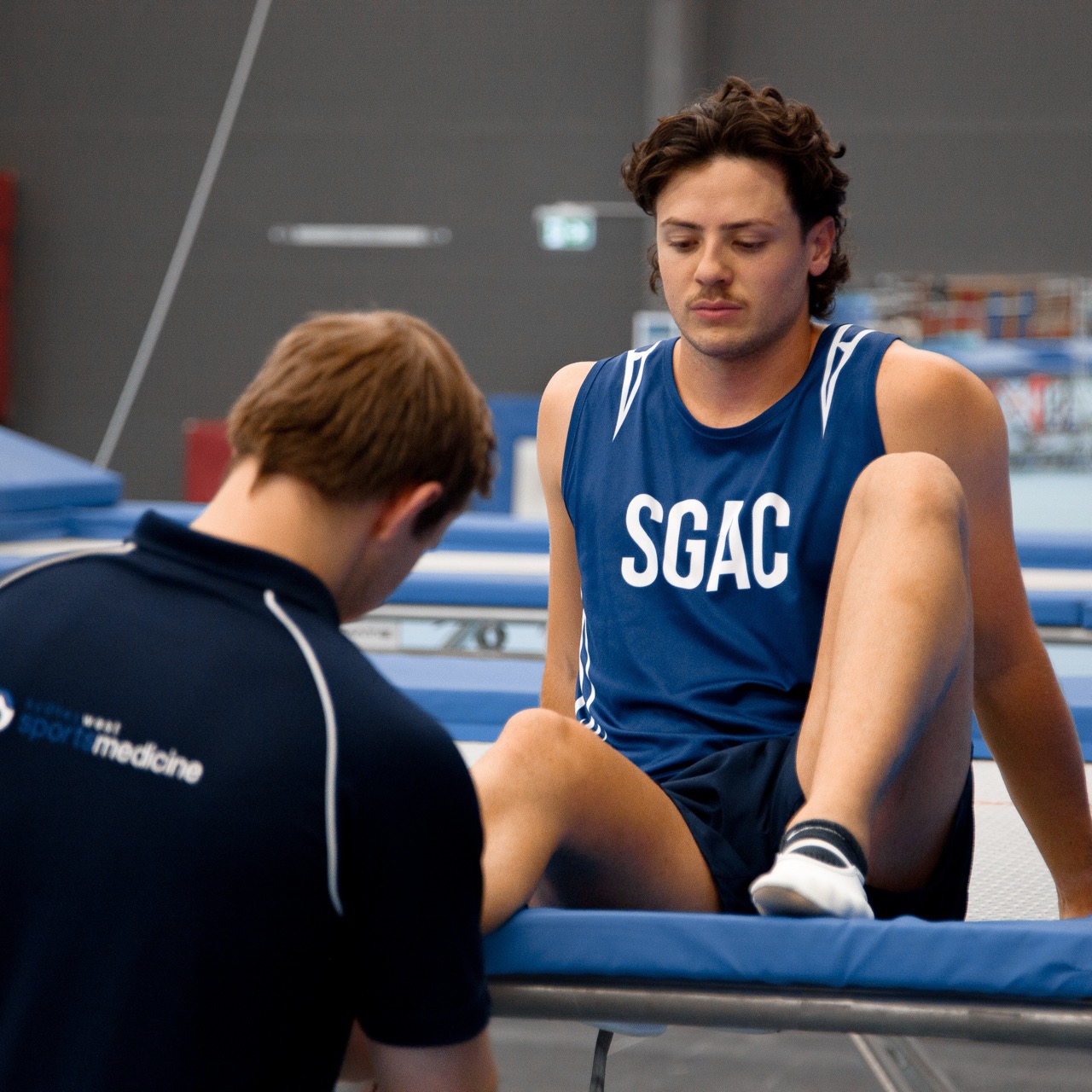
The Part of Injury Nobody Talks About: Mental Health and Physical Recovery
Category: Rehabilitation | Psychology | Performance Read time: 6 min Author: Sydney West Sports Medicine Team
When you injure yourself, the conversation almost immediately turns physical.
Which structure is damaged. How long the recovery will take. Whether you'll need surgery. What the rehabilitation looks like. These are important questions — and answering them well is central to what we do at SWSM every day.
But there is another dimension of injury that is just as real, just as clinically significant, and far less likely to come up in that first appointment: what's happening in your head.
October is Mental Health Month in Australia. And for a sports medicine clinic, it feels like exactly the right time to talk honestly about something the research has been saying for years — that physical injury and mental health are not separate problems. They are deeply, bidirectionally connected. And treating one without the other consistently produces worse outcomes for both.
The Research Is Clearer Than Most People Realise
A 2024 systematic review published by researchers from the Universidad de Murcia — reviewing findings across 25 studies — confirmed what clinicians working in sports rehabilitation have long observed: there is a significant bidirectional relationship between sports injuries and mental health. Not only does injury affect mental health, but pre-existing mental health symptoms can precede a slower recovery, and in some cases increase the risk of injury occurring in the first place.
A separate review published in 2026, examining studies of athletes aged 10 to 19, found that sports injuries were associated with significantly elevated risk of depression, anxiety, and post-traumatic stress. Post-injury depression rates were notably higher in female athletes than males — a finding that underscores the importance of screening across all patient populations, not just elite sport.
And a study of Australian professional footballers published in the British Journal of Sports Medicine found that mental health symptoms were prevalent across both male and female players — and that recent injury was directly associated with higher rates of psychological distress.
These aren't fringe findings. They represent a growing and consistent body of evidence that the sports medicine and rehabilitation world is only beginning to respond to at scale.
What Actually Happens Psychologically After Injury
Understanding why injury affects mental health isn't complicated once you think about what injury actually takes away.
Loss of Identity
For anyone whose sense of self is tied to their physical capability — and that includes far more people than just elite athletes — injury threatens something fundamental. The weekend footballer who trains three nights a week and plays Saturday mornings isn't just losing fitness during recovery. They're losing their community, their routine, their stress outlet, and a meaningful part of how they define themselves.
Research consistently shows that the stronger a person's athletic identity, the greater the psychological risk when that identity is disrupted by injury. This is why two patients with identical physical injuries can have dramatically different recovery experiences — and why the psychological dimension of rehabilitation deserves as much attention as the physical one.
Anxiety, Fear of Reinjury, and Kinesiophobia
One of the most well-documented psychological consequences of injury is kinesiophobia — a fear of movement or reinjury that persists even after the physical structures have healed. Research published in 2025 found that fear of reinjury and low psychological readiness can remain significant barriers to returning to sport, even when physical recovery is clinically complete.
This matters enormously for rehabilitation outcomes. A patient who is physically ready to return to running but terrified of reinjuring their hamstring will unconsciously guard, compensate, and underload the recovering tissue — which ironically increases reinjury risk. The fear becomes self-fulfilling.
Addressing this fear is not a matter of positive thinking or reassurance alone. It requires targeted psychological intervention, graduated exposure, and the kind of supported, graded return to activity that our Exercise Physiology and Physiotherapy teams build into every rehabilitation program at SWSM.
Depression and Grief
Enforced rest and removal from sport can trigger a grief response that closely mirrors other forms of significant loss. Loss of purpose. Loss of social connection. Loss of the physical capability that formed part of your self-concept. For longer-term injuries — ACL reconstructions, stress fractures, post-surgical recoveries measured in months — this grief can deepen into clinical depression if it goes unaddressed.
Research reviewing the psychological consequences of musculoskeletal injury in adult athletes found that injured athletes showed higher rates of anxiety and depression compared to the general population — and that involuntary removal from sport due to injury was one of the most consistent themes associated with increased psychological distress.
It Works Both Ways: Mental Health Affects Physical Recovery
Perhaps the most clinically important — and least understood — dimension of this relationship is that mental health doesn't just suffer because of injury. Poor mental health can actively slow physical recovery and increase the risk of further injury.
The mechanisms are both psychological and physiological. Chronically elevated cortisol from stress and anxiety impairs tissue healing and immune function. Poor sleep — a common symptom of both pain and psychological distress — reduces the quality of overnight tissue repair. And reduced motivation and rehabilitation adherence, driven by depressive symptoms, means patients do less of the physical work their recovery requires.
There is also growing evidence that pre-injury mental health status predicts both injury occurrence and recovery trajectory. Athletes managing high levels of psychological stress, anxiety, or burnout are at elevated injury risk — not because of any physical deficit, but because of the effect psychological load has on movement quality, attention, and fatigue management.
In short: looking after your mental health isn't separate from protecting your physical health. It is part of it.
The Signs Worth Paying Attention To
Psychological responses to injury exist on a spectrum. Some level of frustration, sadness, or anxiety after an injury is completely normal and expected. But there are signs that suggest a more significant psychological response that warrants direct support:
- Persistent low mood that doesn't improve as physical recovery progresses
- Disproportionate anxiety about movement or reinjury that limits participation in rehabilitation
- Social withdrawal — pulling away from teammates, training partners, or social activities
- Loss of motivation for recovery, including poor attendance at appointments or reluctance to do home exercises
- Sleep disturbance that persists beyond the acute injury period
- Feelings of worthlessness, hopelessness, or a loss of purpose connected to being unable to play or train
None of these experiences reflect weakness or a failure to "toughen up." They are clinically recognised responses to a significant physical and psychological stressor — and they are all addressable with the right support.
What Good Rehabilitation Actually Looks Like
The most effective rehabilitation for significant injury treats the whole person — not just the damaged tissue.
At SWSM, this means our Physiotherapy, Exercise Physiology, and Sports Psychology teams work alongside each other, not in silos. When a patient's psychological response to injury is affecting their rehabilitation progress — whether through fear of movement, low motivation, persistent distress, or identity disruption — our Sports Psychologists step in as active members of the recovery team, not as a separate referral at the end of the process.
Practically, this might look like:
Cognitive and behavioural strategies to address fear of reinjury and kinesiophobia — graduated exposure to loading the recovering structure in a controlled, supported way that rebuilds confidence alongside physical capacity.
Goal-setting and identity work to help patients maintain a sense of purpose and progress during the early stages of recovery, when physical improvement is slow and invisible.
Psychological readiness assessment before return to sport — because physical clearance alone is not sufficient. Research consistently shows that athletes who return to play with unresolved fear, low confidence, or poor psychological readiness have significantly higher rates of reinjury than those who are both physically and psychologically prepared.
Sleep and stress management to optimise the physiological conditions for tissue healing and ensure mental health is actively supported throughout the recovery window.
This Isn't Only for Elite Athletes
It would be easy to read this and assume it applies only to professional or high-level competitive athletes — people whose entire identity and livelihood depend on physical performance.
It doesn't.
The recreational runner who has been sidelined for twelve weeks with a stress fracture. The netballer who tore her ACL in the first game of the season. The tradie who injured his shoulder at work and hasn't been able to train for months. The 55-year-old who had a knee replacement and is quietly struggling with who they are when they can't do the things that make them feel like themselves.
These experiences are every bit as real, every bit as clinically significant, and every bit as deserving of support as those of an elite athlete managing a career-threatening injury.
If any of this resonates — whether you're mid-injury, struggling with a return to sport, or supporting someone else through recovery — we'd encourage you to bring it up at your next appointment. It doesn't need to be a formal referral. It starts with a conversation.
You Don't Have to Navigate This Alone
At SWSM, our Sports Psychology service works with patients at every stage of the injury and recovery process — from the early shock of a significant diagnosis, through the long middle weeks of rehabilitation, to the psychological preparation required for a confident return to sport and activity.
Mental health is not separate from physical rehabilitation. At SWSM, it never has been.
Book an appointment → 📞 1300 13 SWSM | reception@swsm.com.au
If you or someone you know is struggling with mental health beyond the context of injury, support is available through Beyond Blue (1300 22 4636) and Lifeline (13 11 14).
Sydney West Sports Medicine is Western Sydney's largest sports medicine and rehabilitation clinic, with locations at West HQ Rooty Hill, BEST Rooty Hill, Norwest, Athletics NSW at Sydney Olympic Park, and Homebush. We accept private patients, NDIS, Workers Compensation, Medicare, DVA, and CTP claims.