

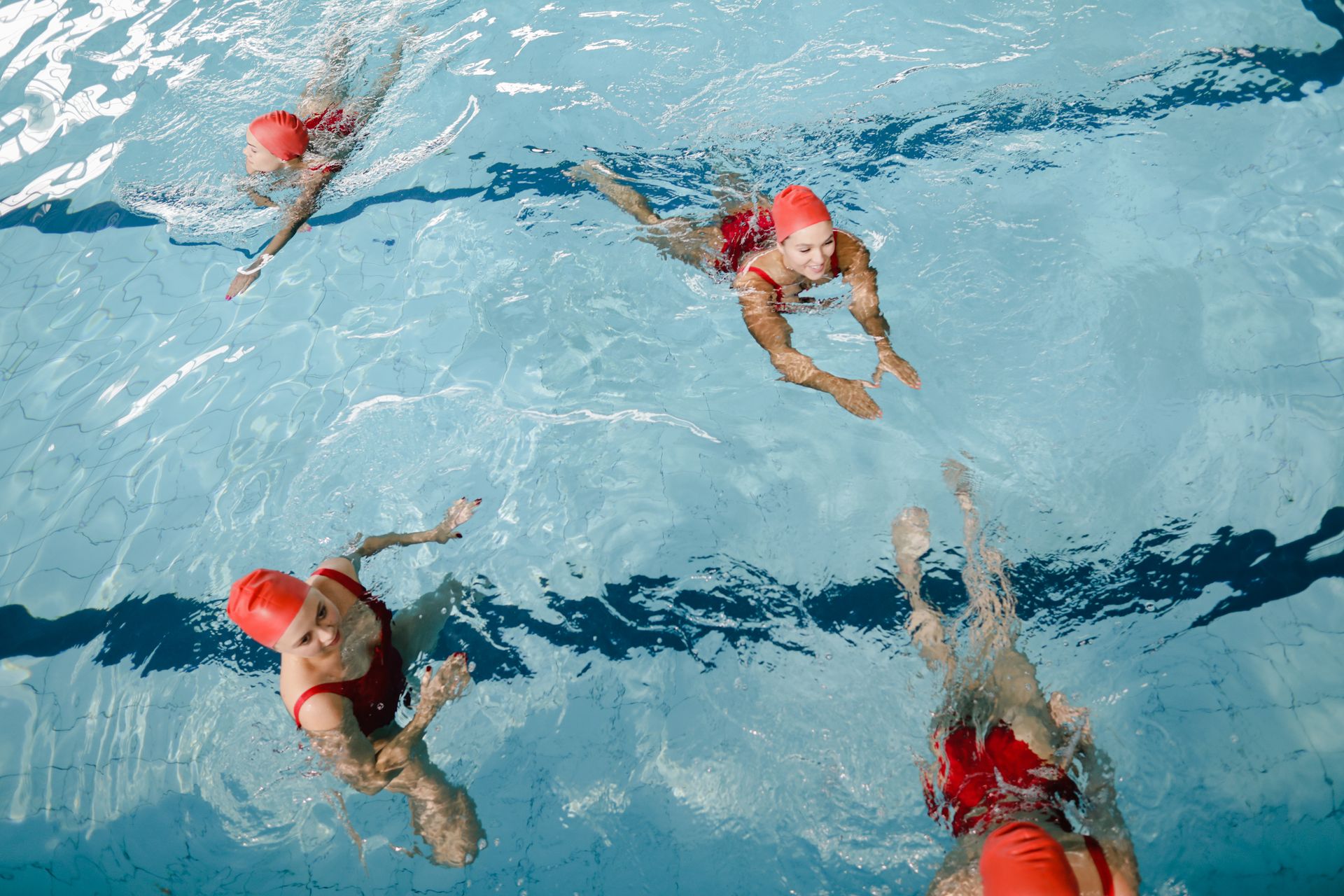
You might have heard the term hydrotherapy thrown around at your physio's office, or seen it listed as a service and quietly wondered: is that just swimming? It's a fair question. And the answer, once you understand what actually happens in a class, often surprises people. Hydrotherapy isn't a passive soak. It's a structured, clinician-guided rehabilitation and fitness program that uses the unique properties of warm water to help people move better, recover faster, and build strength they couldn't safely build on land.
At Sydney West Sports Medicine, our hydrotherapy classes run Monday to Friday across our West HQ and BEST locations, and are led entirely by Accredited Exercise Physiologists. Here's everything you need to know.
What Actually Happens in a Hydrotherapy Session?
Our sessions run for 60 minutes in a heated pool and are capped at a maximum of 10 participants, so you're never just another face in the water. Each class is designed and supervised by one of our accredited Exercise Physiologists, who tailor the exercises to the group's needs and individual goals.
Depending on the class, you'll work through a combination of:
- Resistance and strengthening exercises using water's natural drag
- Balance and stability work
- Cardiovascular conditioning
- Mobility and range-of-motion movements
- Core and postural training
No swimming ability is required. You don't need a referral. And the water depth is such that participation is safe for virtually any fitness level or physical condition.

Why Water? The Science Behind the Benefit
Warm water does three things that land-based exercise can't fully replicate.
Buoyancy reduces joint load. When you're submerged to chest height, your body weight is reduced by up to 80%. That means your joints, particularly hips, knees, ankles and spine, carry a fraction of the usual load. For someone with osteoarthritis, a recent surgery, or chronic pain, this is the difference between being able to exercise at all and sitting on the sidelines.
Hydrostatic pressure supports circulation. The gentle, even pressure of water around your body helps improve blood flow and lymphatic drainage. This reduces swelling, eases muscular tension, and accelerates recovery which is why athletes have used cold and warm water immersion as recovery tools for decades.
Warm water relaxes muscle and increases range of motion. Heat increases tissue extensibility. In a warm pool, muscles that are stiff or guarded on land begin to relax, allowing a greater range of movement and making exercise more comfortable, often from the very first session.

Who Benefits Most From Hydrotherapy?
The honest answer is: more people than you'd think. While hydrotherapy is often associated with older adults, it's used effectively across a wide range of ages, conditions, and goals
People Managing Chronic Pain or Conditions
Hydrotherapy is particularly well-suited for individuals living with osteoarthritis, fibromyalgia, chronic low back pain, or inflammatory joint conditions. The reduction in gravitational load allows meaningful, progressive exercise without aggravating painful joints. Our Exercise Physiologists also use the hydrotherapy space to support participants managing Type 2 Diabetes, where water-based cardiovascular exercise can be an effective and accessible entry point.

Post-Surgical Rehabilitation
Following joint replacements, orthopaedic procedures, or soft tissue repairs, getting back to exercise on land can feel daunting and premature loading is a genuine risk. Hydrotherapy provides a controlled environment to begin rebuilding strength and range of motion early in the recovery process, often weeks before land-based loading would be appropriate.
People Deconditioned or Starting Their Fitness Journey
Not everyone walks through the door ready for a gym floor program. For individuals who are significantly deconditioned, carrying excess weight, or simply haven't exercised in years, hydrotherapy offers a low-barrier, high-comfort starting point. It builds confidence alongside fitness and the group format helps with motivation and consistency.
Neurological and Complex Conditions
Our team has experience working with clients managing conditions like Cerebral Palsy, Multiple Sclerosis, and Parkinson's Disease, where balance, coordination, and spasticity make land-based exercise challenging. The pool environment provides both physical support and a safer space to practise movement patterns that would carry fall risk on land.
Athletes in Early-Stage Injury Rehabilitation
There's a reason elite sports programmes include pool-based conditioning. An athlete recovering from a hamstring strain, stress fracture, or lower limb surgery can maintain cardiovascular fitness and tissue quality through the pool while the injury heals — protecting their overall conditioning and shortening the return-to-play timeline. This aligns naturally with our Graded Return to Play Protocols for athletes working their way back to full training.
NDIS Participants
Hydrotherapy is a recognised and fundable service under the NDIS. For participants whose conditions limit land-based exercise, the pool provides one of the most effective and enjoyable rehabilitation environments available. Our team works with NDIS clients across all our locations.

What Makes SWSM's Hydrotherapy Different?
There's a meaningful distinction between a general aqua aerobics class at a community pool and a clinician-supervised hydrotherapy program. The difference lies in who designs the program and what it's designed to achieve.
At SWSM, every hydrotherapy session is led by an Accredited Exercise Physiologist — a university-trained allied health professional with specific expertise in clinical exercise prescription. That means your program is informed by your health history, your current condition, and your rehabilitation or fitness goals. If you're also seeing a Physiotherapist, Sports Physician, or other practitioner at SWSM, your hydrotherapy fits into a coordinated plan, not a separate silo.
.jpg)
Our team includes Exercise Physiologists Haylee Ingle, Nina Semenov, Andrea Borovic, Jordan Gauci, Blake Ford, and Dinora De Venuti — each of whom brings distinct clinical experience to the pool, from chronic disease management to musculoskeletal rehabilitation and athletic performance.
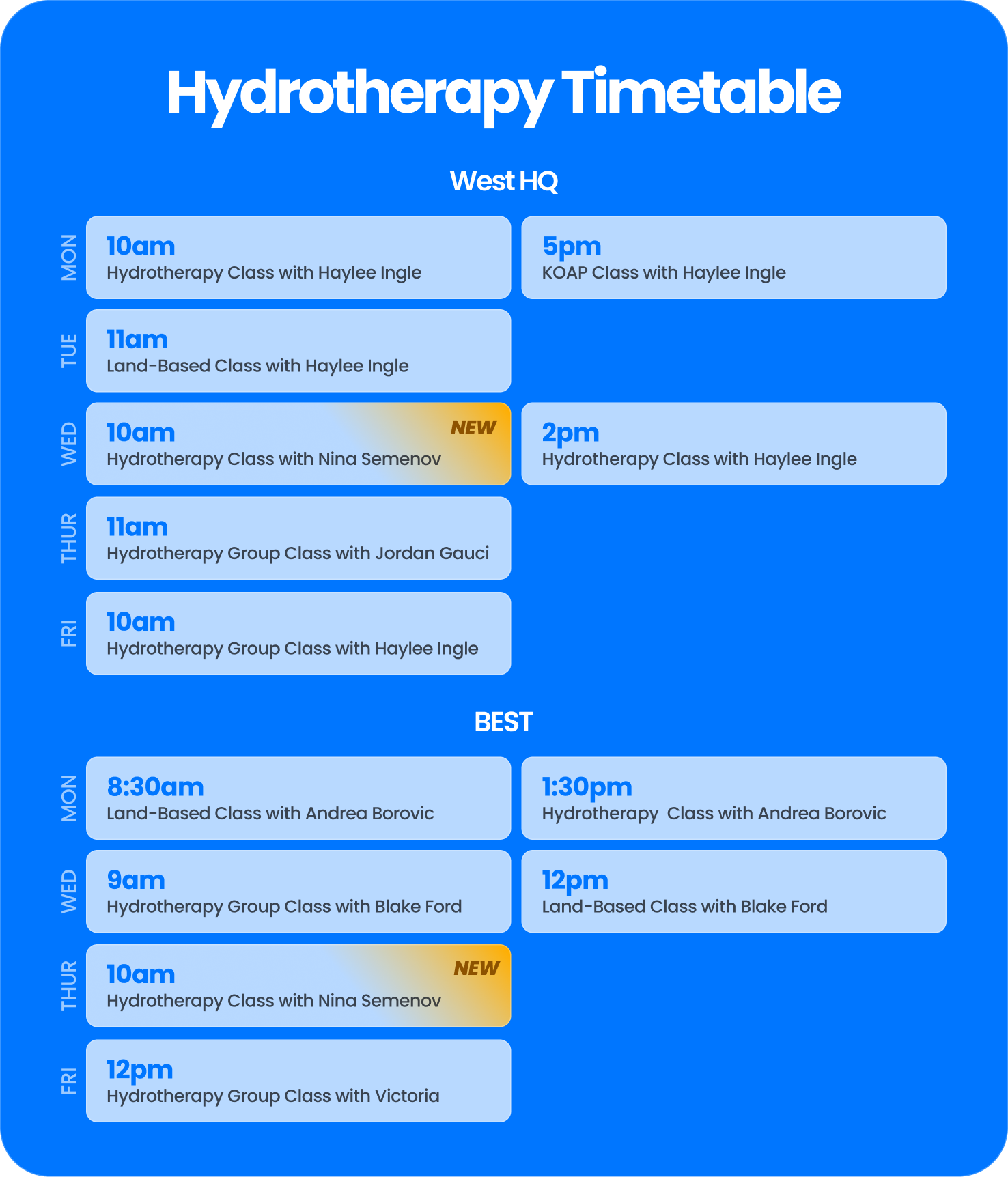
Land-based classes are also available at both locations on selected days. Prepaid passes are available and class sizes are capped at 10. No referral required.
Is It Right for You?
If you're unsure whether hydrotherapy is the right fit for where you're at, the easiest first step is a conversation. Our team can assess your situation and recommend whether pool-based exercise, a land-based Exercise Physiology program, or a combination of both is the right approach for your goals.
Book an appointment at your nearest SWSM location, or call us on 1300 13 SWSM to speak with a member of the team.
Sydney West Sports Medicine is Western Sydney's largest sports medicine and rehabilitation clinic, with locations at West HQ Rooty Hill, BEST Rooty Hill, Norwest, Athletics NSW at Sydney Olympic Park, and Homebush. We accept NDIS, Workers Compensation, Medicare, DVA, and private patients.